Most commercial buildings are tolerant environments. If the HVAC is undersized by ten percent, people are a bit uncomfortable. If the humidity drifts five points above target, nobody notices. If the as-built drawings are slightly wrong, the renovation team deals with it.
Some buildings don't have that margin.
In a cannabis cultivation facility, a two-degree temperature variance in the wrong direction can destroy an entire grow cycle. In a data centre, a cooling failure measured in minutes can cost hundreds of thousands in equipment damage and lost revenue. In a pharmaceutical cleanroom, a pressure differential that drops below specification means the room fails certification and production stops.
These are controlled environments — facilities where the building systems aren't supporting human comfort but actively maintaining conditions that the operation depends on. And they present documentation challenges that standard site surveys are not equipped to handle.
What Makes Controlled Environments Different
The fundamental distinction is that in a controlled environment, the building systems ARE the operation. The HVAC isn't keeping people comfortable — it's maintaining a specific temperature, humidity, and air exchange rate that the product, the process, or the equipment requires. The electrical system isn't running lights and computers — it's providing redundant, uninterruptible power to systems that cannot go down.
This means documentation of these environments can't stop at walls, floors, and ceilings. It has to capture the systems that make the space functional — and it has to capture them with enough precision and structure to be useful for compliance, planning, and operational management.
A standard Matterport walkthrough tells you what the space looks like. It doesn't tell you what the dehumidification capacity is, where the backup power switches over, how the air pressure cascades between zones, or whether the security camera coverage matches the regulatory submission. Those are the questions that matter in controlled environments.
Cannabis Facilities — Where Documentation Meets Regulation
Licensed cannabis operations face a documentation burden that most commercial facilities don't encounter. Regulatory bodies in most jurisdictions require detailed facility plans showing security camera positions, access control zones, restricted areas, vault rooms, cultivation zones, processing areas, and the spatial relationships between them.
The problem is that these plans are typically produced during the licensing application — often before construction is complete — and are rarely updated as the facility evolves. Equipment moves. Walls go up. Camera positions change. The grow operation expands into spaces that weren't in the original plan. The gap between the regulatory submission and the physical reality widens with every operational quarter.
When an audit arrives, this gap becomes a compliance risk. When an investor conducts due diligence, it becomes a valuation risk. And when the operator wants to expand or modify the licence, the process of producing accurate current documentation from scratch is far more expensive than keeping it current would have been.
Proactive operators document their facilities comprehensively and keep that documentation current. The capture includes the spatial layout (LiDAR for precision), the environmental control systems (HVAC, dehumidification, CO2, lighting, irrigation), the security infrastructure (cameras, access control, alarm systems), and the zoning documentation (restricted areas, limited access areas, vault rooms) — all spatially referenced and structured for compliance review.
For multi-state operators running facilities in multiple jurisdictions with different regulatory requirements, standardised documentation across all locations makes compliance management systematic rather than reactive.
Data Centres — Where the Documentation Is the Insurance
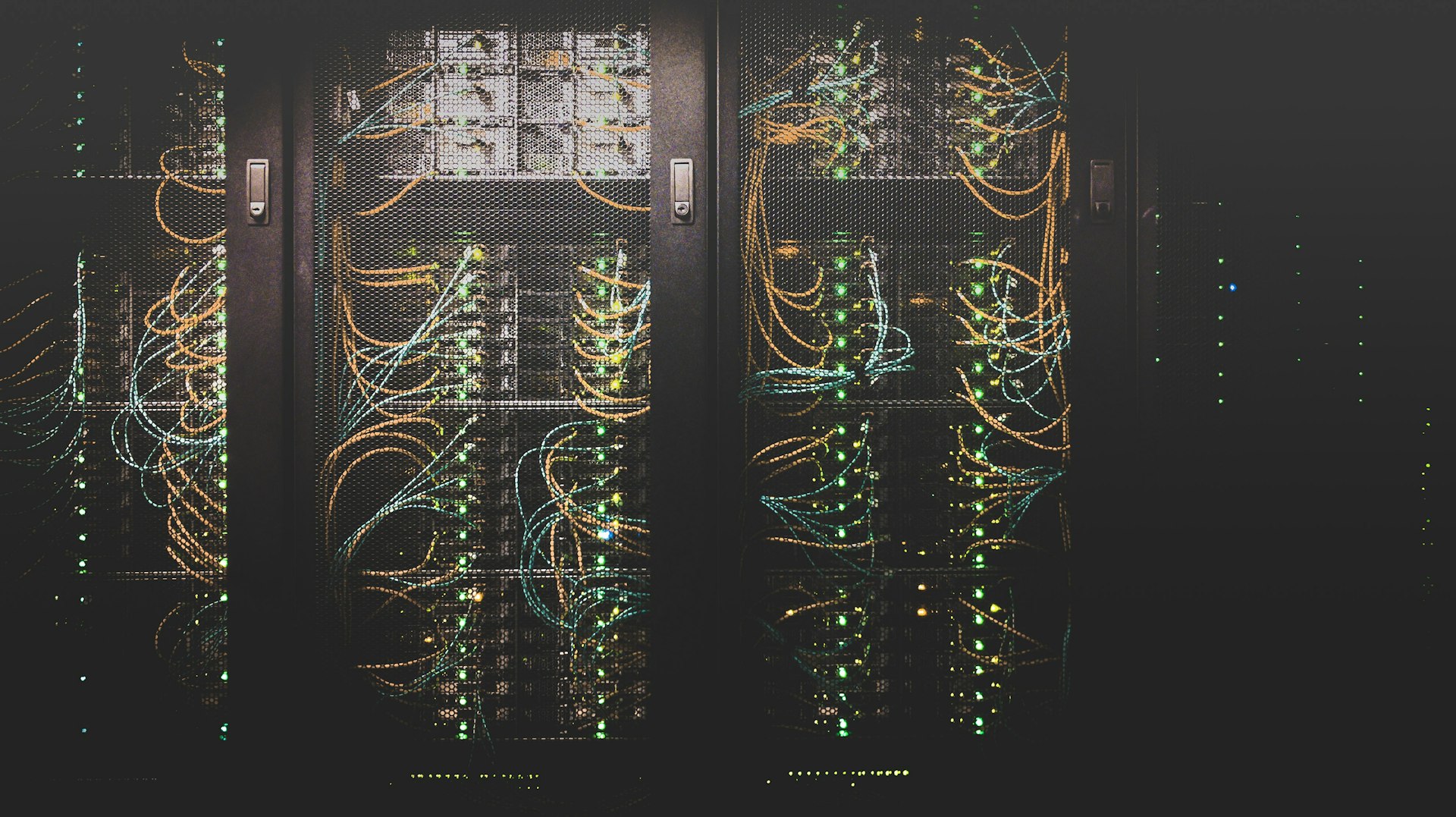
Data centres are among the most infrastructure-dense environments in commercial construction. A single facility can contain millions of dollars in electrical distribution equipment, thousands of server cabinets, complex cooling architectures, and redundancy systems whose layout and condition determine the facility's operational resilience. The documentation challenge intensifies when operators are planning expansion or retrofit — a scenario we cover in detail in data center documentation for expansion and retrofit projects.
The documentation challenge is twofold. First, the density: there is simply more to capture per square metre than in any other building type. Rack positions, power distribution paths, cooling flows, cable tray routing, above-floor and below-floor infrastructure. Second, the pace of change: equipment moves, loads rebalance, and capacity allocations shift continuously.
Data centre documentation at the level that engineering and planning teams actually need goes well beyond spatial capture. It includes rack and cabinet inventories, power distribution mapping from utility intake through UPS and PDUs to the rack, cooling infrastructure documentation (CRAH/CRAC units, containment systems, raised floor configurations), and thermal imaging of the entire electrical distribution chain.
The thermal capture is particularly consequential. Electrical connections in data centre power distribution operate under continuous load. A connection that's degrading — corroding, loosening, increasing in resistance — generates localised heat that is invisible to visual inspection but clearly visible to a calibrated thermal camera. Identifying these hotspots before they fail is the difference between a planned maintenance window and an unplanned outage.
The Common Thread — Systems Documentation, Not Just Spatial Documentation
What cannabis facilities, data centres, cleanrooms, and other controlled environments share is that the building's value is inseparable from its systems. You can't document the facility without documenting the environmental controls, the power infrastructure, the security systems, and the compliance-relevant spatial relationships.
This is where generic site surveys fail. A surveyor who measures walls and takes photographs captures the container but misses the contents. And in a controlled environment, the contents are the point.
Effective documentation of these environments requires:
Environmental systems inventory
Not just "there is an HVAC system" but the specific equipment, manufacturer, model, capacity, configuration, and visible condition. For cannabis, this includes dehumidification and CO2 supplementation. For data centres, it includes cooling architecture and containment. For cleanrooms, it includes air handling, filtration, and pressure cascade systems.
Power infrastructure mapping
The complete electrical distribution path, documented with spatial precision and supplemented with thermal imaging to identify deteriorating connections. In facilities where power reliability is non-negotiable, this documentation is an operational tool, not just a record.
Compliance-relevant spatial documentation
Security zones, access control, restricted areas, camera coverage — captured with enough precision to support regulatory submissions and audit preparation. Not approximate floor plans — measured, accurate, verifiable spatial data.
Structured, accessible delivery
Documentation that's organised by system type, spatially referenced, and accessible to every stakeholder who needs it: operations, compliance, engineering, facilities management. Not a folder of files — a structured intelligence platform that serves the way these teams actually work.
The Crossover with Renewable Energy Infrastructure
It's worth noting that the principles of controlled environment documentation extend beyond enclosed buildings. Solar farms and battery energy storage systems present similar challenges: infrastructure-dense environments where the systems ARE the asset, where thermal diagnostics reveal problems invisible to visual inspection, and where documentation needs to be spatially precise across sites that can span hundreds of acres.
A battery energy storage system container has more in common with a data centre than with a warehouse. The thermal management, the electrical distribution, the fire suppression, and the environmental monitoring all require the same depth of documentation. The difference is scale and setting — not methodology.
Conclusion
Controlled environments reward precision in documentation because they punish imprecision in everything else. A two-degree variance, a pressure drop, a connection failure — the consequences in these facilities are measured in lost product, lost revenue, lost compliance, or lost uptime.
The documentation should match the environment it serves. Not generic. Not approximate. Structured, measured, system-aware, and delivered in a format that the teams running these facilities can actually use.
AlturaScope documents controlled and precision environments across the United States, Canada, and the United Kingdom — from cannabis cultivation and data centres to industrial cleanrooms and renewable energy infrastructure. UK-based operators can also read our guide to data centre surveys for UK expansion and compliance. Tell us about your facility.