Specialist Sectors · Renewable Energy
Solar Farm & Renewable Energy Site Documentation
Structured intelligence for the assets powering the grid — from pre-construction through operations.
The Problem
Scale that defeats traditional documentation.
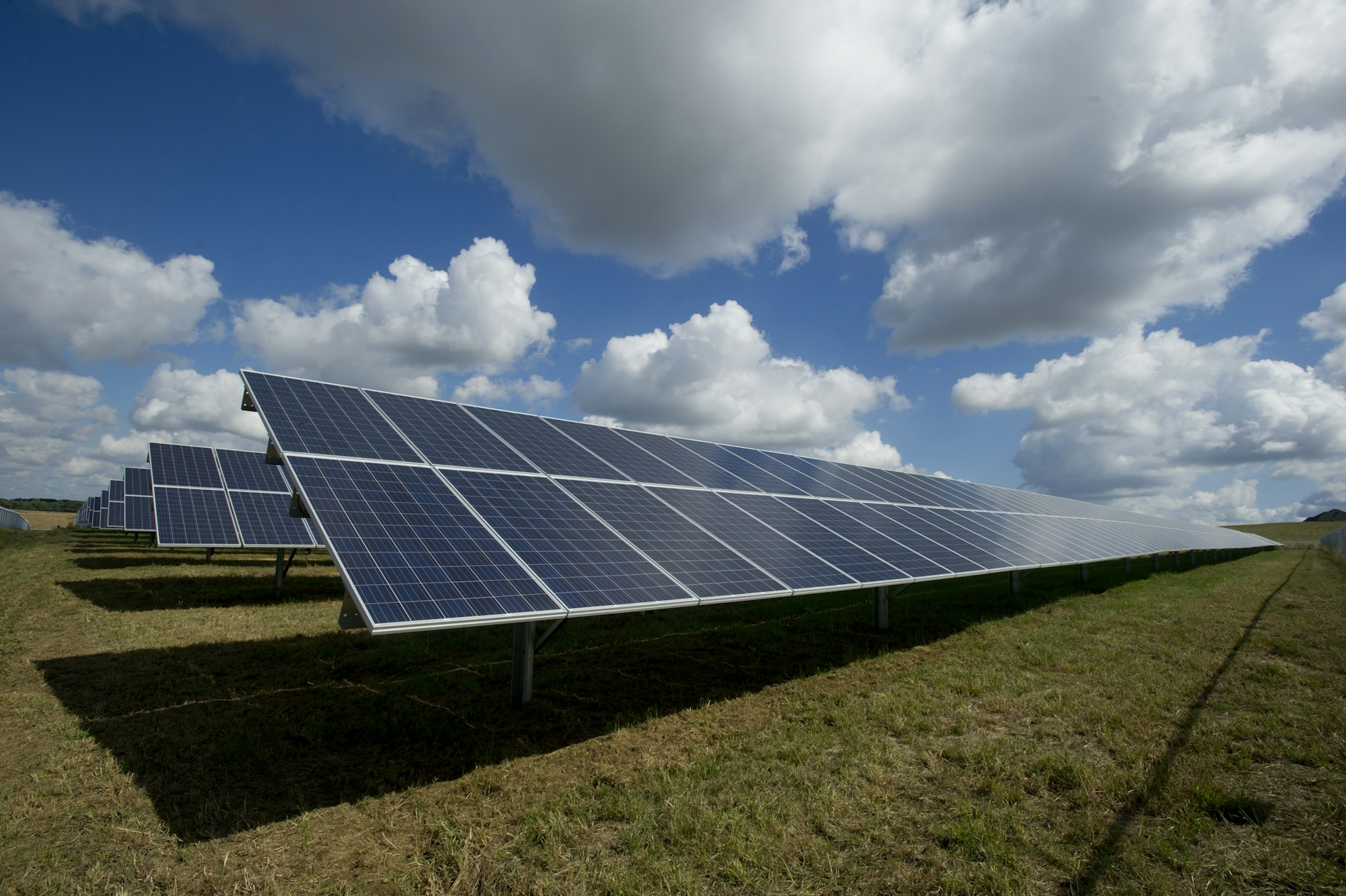
Renewable energy development moves fast. Solar farms, battery energy storage systems, and associated infrastructure are being deployed at unprecedented scale across North America and the UK. Every phase of the lifecycle — site evaluation, design, construction, commissioning, operations, and maintenance — depends on accurate documentation of what exists on and around the site.
Pre-construction, developers need precise topographic and spatial data to inform panel layout, grading design, and interconnection planning. During construction, owners and lenders need verified as-built documentation confirming what was actually installed matches what was designed. In operations, performance issues — underperforming panels, hotspots, inverter anomalies, vegetation encroachment — need to be identified and located precisely across sites that can span hundreds of acres.
The scale of these sites makes traditional documentation approaches impractical. Walking a 500-acre solar farm with a clipboard doesn't work. Drone-based LiDAR and thermal capture does.
The Deliverable
What we capture.
Pre-Construction Site Documentation
LiDAR-based topographic capture of the development site — existing terrain, vegetation, structures, access routes, and utility infrastructure. Georeferenced spatial data that supports site design, grading calculations, environmental review, and permitting.
As-Built Verification
Post-construction documentation confirming installed infrastructure matches design intent. Panel array positions, racking systems, inverter locations, combiner boxes, electrical infrastructure, fencing, access roads, and drainage — all captured and spatially referenced for owner's acceptance and lender verification.
Aerial Thermal Imaging
Drone-based thermal capture across the array identifying underperforming panels, hotspot cells, bypass diode failures, string-level anomalies, and connection issues. Every thermal observation is georeferenced — your O&M team receives precise panel locations for each anomaly, not a thermal image of a generic field of panels.
Inverter and Electrical Infrastructure
Ground-level documentation of inverter stations, transformers, switchgear, combiner boxes, and cable routing. Manufacturer data, nameplate specifications, and visible condition — structured and spatially located within the site model.
Battery Energy Storage Systems (BESS)
For co-located or standalone battery storage: container positions, HVAC and fire suppression systems, electrical connections, and thermal documentation of operating temperatures. The documentation that supports both operational monitoring and regulatory compliance.
Vegetation and Encroachment Monitoring
Aerial and ground-level documentation of vegetation conditions affecting panel performance, access, or structural loading. Repeat capture cycles provide comparative data showing progression over time.
Structured Reporting via ScopeWalk
All site data is delivered through ScopeWalk in a structured, searchable, spatially-referenced format. Filter by system, zone, or anomaly type. Export for integration with SCADA, CMMS, or asset management platforms.
How it works.
01
Scope and Coordination
We work with your development, construction, or O&M team to define capture scope, access requirements, and scheduling. For operational sites, we coordinate around maintenance windows and grid commitments.
02
Site Capture
Drone-based LiDAR and thermal capture for large-area coverage, supplemented by ground-level documentation of electrical infrastructure and equipment. Site capture timelines depend on scale — from a single day for smaller arrays to multiple days for utility-scale installations.
03
Processing and Delivery
Georeferenced deliverables through ScopeWalk: point clouds, orthomosaics, thermal maps, structured anomaly reporting, and asset inventories. Data is delivered in formats compatible with GIS, CAD, and SCADA platforms.
We operate across all fifty US states, every Canadian province, and the United Kingdom. Travel is included in all project pricing. For UK projects, visit Alturascope UK.
Common questions about solar farm documentation.
What size solar installations can you document? +
We document installations ranging from commercial rooftop arrays to utility-scale ground-mounted farms spanning hundreds of acres. Our drone-based capture methodology scales efficiently — larger sites require more flight time but the approach is the same.
Can thermal imaging identify individual failing panels? +
Drone-based thermal imaging can identify panel-level and cell-level thermal anomalies — including hotspot cells, bypass diode failures, and string-level underperformance. Each anomaly is georeferenced so your maintenance team knows the exact panel location, row, and position within the array.
Do you provide performance analysis or engineering recommendations? +
We provide structured documentation: thermal anomaly maps, asset inventories, and spatial data. Performance analysis, root cause determination, and engineering recommendations are for your O&M engineers or specialist consultants. Our documentation gives them the field data they need to work efficiently and accurately.
Can you provide repeat capture for ongoing monitoring? +
Yes. Scheduled capture cycles — annually, semi-annually, or aligned with your maintenance programme — provide comparative data over time. This enables trend analysis on panel degradation, vegetation encroachment, and infrastructure condition, all through the same structured reporting framework.
Do you cover battery storage facilities as well? +
Yes. Battery energy storage systems are documented with the same rigour — spatial positioning, thermal monitoring, electrical infrastructure, and environmental systems. For co-located solar-plus-storage sites, everything is captured in a single deployment.
Tell Us About Your Site
Share your site location, phase (pre-construction, construction, or operational), approximate scale, and what you need documented. We respond within one business day with a scope recommendation and all-in pricing — travel included.
Start a Project