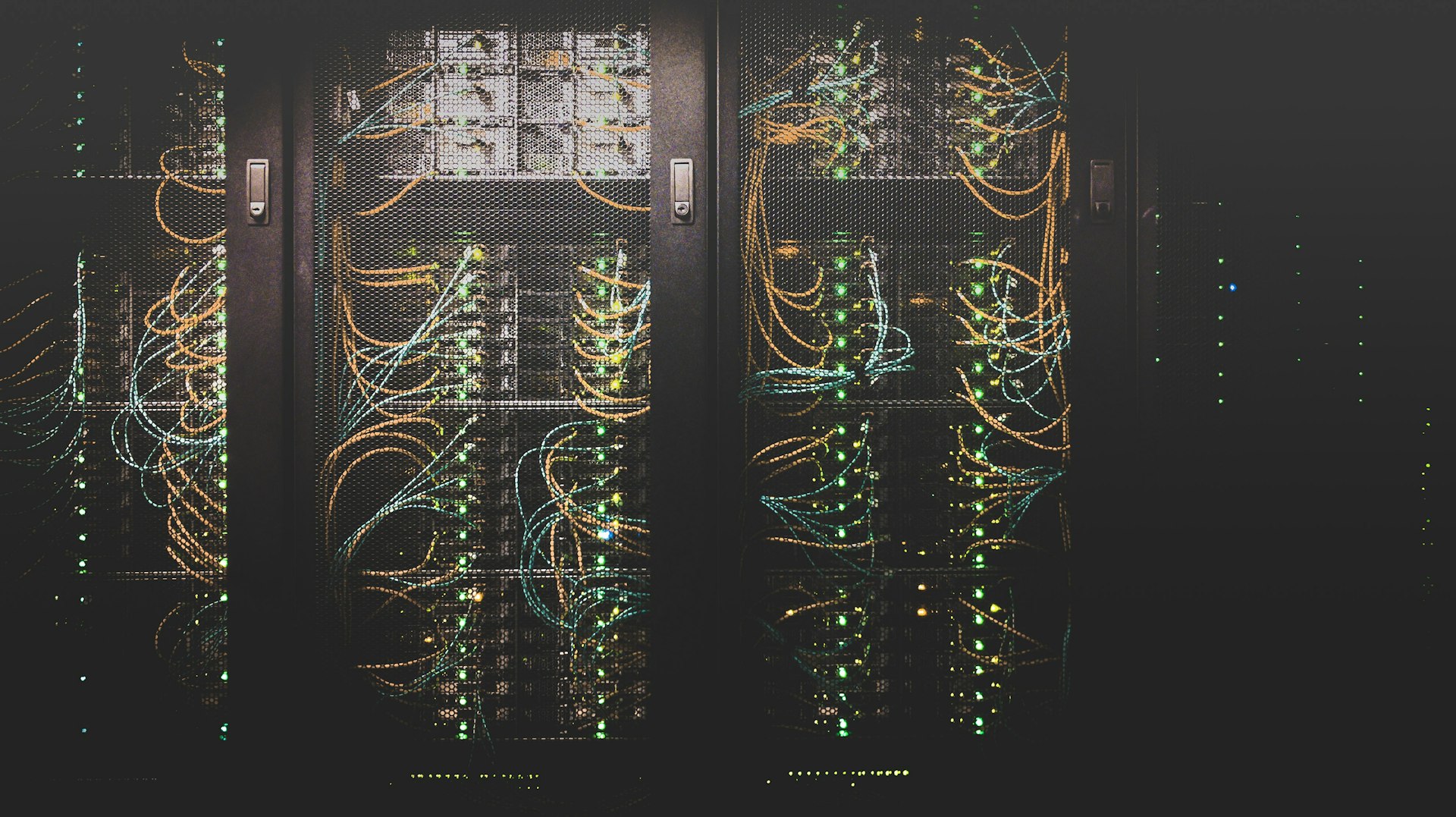
Specialist Sectors · Data Centres
Data Centre Documentation
Millimetre-accurate reality capture for the infrastructure that can't afford ambiguity.
The Problem
The cost of planning from assumptions.
Data centre operators make expansion, retrofit, and capacity planning decisions worth tens of millions of dollars — and as we outline in our guide to what facilities teams need before expansion, those decisions depend on knowing precisely what exists today: every rack position, every power run, every cooling path, every square metre of available white space.
Most facilities rely on outdated CAD drawings that stopped being accurate the week after commissioning. As-built documentation drifts further from reality with every cabinet move, every power rebalancing, every cooling modification. When it comes time to plan the next phase, engineering teams are working from assumptions, not data.
The cost of getting it wrong in a live data centre environment is measured in downtime — and downtime is measured in hundreds of thousands per hour.
The Deliverable
What we capture.
Every data point your engineering and planning teams need — spatially referenced, structured, and accessible through a single platform.
Spatial Documentation
Complete LiDAR point cloud of the facility — millimetre-accurate, survey-grade. Every aisle, every row, every overhead cable pathway, every underfloor void. This isn't a Matterport walkthrough. This is a measurable, georeferenced 3D dataset your engineers can extract dimensions from, plan against, and trust.
Rack and Cabinet Inventory
Structured documentation of rack positions, U-space allocation, and cabinet configurations. Photographed, tagged, and spatially located within the point cloud so your planning team can see exactly what's where without entering the white space.
Power Distribution Mapping
Documentation of the power chain from utility intake through UPS, switchgear, PDUs, and busway to the rack level. Nameplate data, visible condition, and spatial location — everything an electrical engineer needs to model existing capacity and plan additional load.
Cooling Infrastructure
CRAH and CRAC unit locations, capacities, and nameplate data. Hot aisle / cold aisle configurations. Containment systems. Raised floor tile layouts — perforated versus solid — mapped spatially so airflow modelling can begin from real geometry, not guesswork.
Thermal Imaging
Calibrated thermal capture across the facility: hotspot identification in electrical distribution, temperature differential mapping across cooling zones, and thermal documentation of cabinet faces to identify uneven heat loads. All thermal observations are georeferenced within the 3D model — not standalone JPEGs with vague location descriptions.
Structured Reporting via ScopeWalk
Every data point captured feeds into ScopeWalk, our proprietary reporting platform. Your team receives structured, searchable, spatially-referenced documentation — not a folder of files. Engineers, planners, and operations staff can access what they need without sifting through raw scan data.
How it works.
01
Scope and Protocol
We work with your facilities team to define what needs capturing and any access constraints — particularly around live environments, restricted zones, and scheduling windows.
02
On-Site Capture
A single site visit with LiDAR, thermal, and photographic capture. We work around live operations. No disruption to running systems. Typical facility capture is completed within one to two days depending on scale.
03
Processing and Structuring
Raw capture is processed into deliverables: registered point cloud, thermal overlay, structured asset inventory, and spatial documentation — all assembled within ScopeWalk.
04
Delivery
Your team receives access to the complete dataset via ScopeWalk. Point cloud data is also available for export in standard formats (E57, LAS, RCP) for integration with your existing CAD, BIM, or DCIM platforms.
We operate across all fifty US states, every Canadian province, and the United Kingdom. Travel is included in all project pricing. For UK projects, visit Alturascope UK or read about UK-specific data centre survey requirements.
Common questions about data centre documentation.
Can you work in a live data centre environment without disruption? +
Yes. Our capture methodology is non-contact and non-invasive. We use LiDAR and thermal imaging — no physical interaction with any equipment, no power shutdowns, no access panel removal required. We coordinate with your operations team on scheduling and access protocols.
How accurate is the LiDAR data? +
We deliver millimetre-accurate point clouds using survey-grade LiDAR equipment. This is significantly more precise than camera-based systems like Matterport and is suitable for engineering planning, capacity modelling, and design coordination.
Do you provide engineering analysis or capacity recommendations? +
We provide comprehensive, structured documentation — the raw intelligence your engineering team or consultants need to make informed decisions. We do not provide engineering opinions, capacity assessments, or compliance certifications. Our role is to ensure the data is complete, accurate, and accessible.
Can the data integrate with our existing DCIM or BIM platforms? +
Yes. Point cloud data is delivered in industry-standard formats. Structured asset data from ScopeWalk can be exported for integration with DCIM platforms, BIM environments, or your own internal systems.
Tell Us About Your Facility
Share your facility details, scope requirements, and timeline. We respond within one business day with a scope recommendation and all-in pricing — travel included.
Start a Project