Every day a restaurant is closed for renovation, the franchisee loses money. Depending on the brand and location, dark time — the period when a QSR location stops trading during a reimage — can cost anywhere from $5,000 to $15,000 per day in lost revenue. Multiply that across a programme of 50, 100, or 200 locations, and even a single day of unnecessary closure per site becomes a seven-figure problem.
The biggest driver of extended dark time isn't labour shortages or supply chain delays. It's site surprises — conditions that nobody documented before the programme began, discovered only after demolition has started and the clock is already running.
This is where pre-construction survey data changes the equation entirely.
The Dark Time Problem
Rapid reimage programmes are built around speed. The operating model is straightforward: close a location, execute the renovation scope as quickly as possible, reopen. The best-run programmes achieve this in days, not weeks. The difference between a five-day reimage and a twelve-day reimage isn't just inconvenience — it's the difference between a profitable programme and one that erodes franchisee confidence.
The problem is that speed depends on predictability, and predictability depends on knowing exactly what's inside each location before a single crew member arrives on site. In practice, many reimage programmes still begin with assumptions rather than verified conditions.
Here's what that looks like in the field:
Undocumented Kitchen Infrastructure
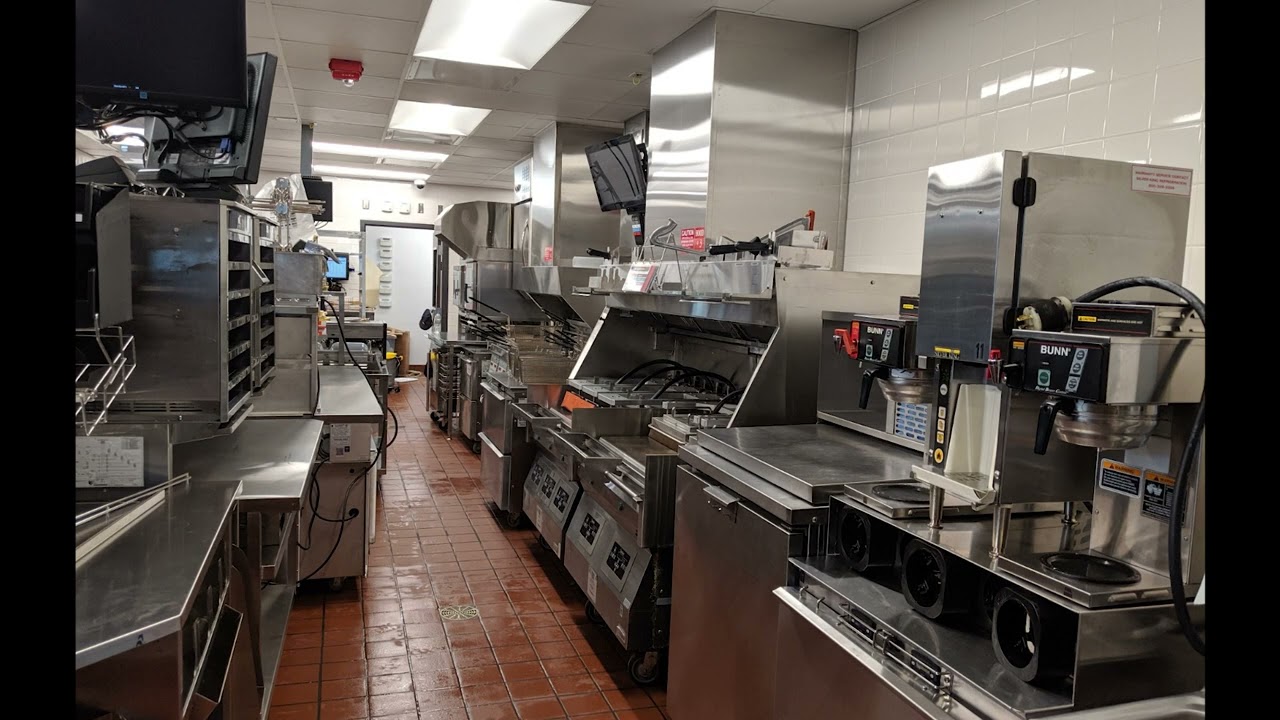
Grease traps in unexpected locations. Non-standard hood configurations that don't match the design package. Exhaust ductwork that was modified during a previous renovation and never recorded. Gas line routing that contradicts the original drawings. Every one of these discoveries triggers a field modification, and field modifications during active dark time are the most expensive changes you can make.
Hidden MEP Conditions Above Ceiling
Most QSR locations have been renovated at least once. Each renovation leaves behind undocumented electrical runs, abandoned ductwork, fire suppression modifications, and plumbing routes that don't appear on any drawing. When the new design assumes a clear pathway for HVAC or electrical and the contractor opens the ceiling to find something else entirely, the programme stops while the design team scrambles to adjust. This is the single most common cause of unplanned dark time extension. Our guide to above-ceiling MEP surveys covers what's typically hidden and how to document it.
Dimensional Inaccuracies in Prefabricated Elements
Many national reimage programmes use a Store-in-a-Box model — prefabricated components manufactured offsite and shipped to each location for rapid installation. This approach only works when the dimensional data feeding the fabrication shop is accurate. A two-inch discrepancy on a wall dimension means a countertop doesn't fit, a millwork panel needs field-cutting, or an equipment package arrives and can't be installed as designed. Each instance adds hours or days of dark time and erodes the efficiency that prefabrication was supposed to create.
What Pre-Construction Survey Data Eliminates
A comprehensive pre-construction survey conducted before the design phase captures the verified conditions that every downstream decision depends on. For a QSR reimage programme, this means:
Verified dimensional data
Millimetre-accurate spatial data from LiDAR and Matterport capture that feeds directly into design and fabrication workflows, eliminating the guesswork from prefabricated component manufacturing
Above-ceiling MEP documentation
360° pole-mounted photography and borescope capture documenting every duct run, electrical route, plumbing path, and fire suppression component above the ceiling grid — before the ceiling is disturbed
Kitchen equipment schedule
Every piece of kitchen equipment documented with make, model, service connections, and spatial position — so the new equipment package is designed against what's actually there, not what was there five years ago
Conditions assessment
A structured report identifying existing deficiencies, code compliance concerns, and conditions that will affect the reimage scope — prioritised so the design team knows what to plan for before committing a single line to paper
Navigable digital twin
A Matterport digital twin of the entire location that design teams, project managers, and fabrication partners can revisit as many times as needed without travelling to site
When every stakeholder in the programme — from the design team to the fabrication shop to the installation crew — is working from the same verified dataset, the surprises that extend dark time simply don't occur.
The Programme-Level Impact
The value of pre-construction survey data compounds at programme scale. When you're reimaging 100 locations, even a modest improvement in predictability per site translates into significant savings across the portfolio.
Reducing average dark time by even one day per location across a 100-site programme at $8,000/day in lost revenue saves $800,000 in franchisee impact alone.
Eliminating two change orders per location at an average of $3,500 each saves $700,000 across the programme.
Removing the need for return survey visits after design has started saves $1,500–$3,000 per location, programme-wide.
The cost of a professional pre-construction survey at each location is a fraction of any one of these. For operators running multi-site rollout programmes, survey data isn't an optional extra — it's the foundation the entire programme schedule is built on.
Why Consistency Matters More Than Coverage
It's one thing to survey a restaurant. It's another to survey 100 restaurants and deliver data that's structured identically across every location, so your design team can compare conditions site-to-site and your programme managers can track status at portfolio level.
When each location is surveyed by a different local provider with a different methodology and a different deliverable format, the data becomes fragmented. Design teams waste time reconciling inconsistent information instead of designing. Programme managers lose visibility because there's no standardised way to compare one location's readiness against another.
The alternative is a standardised survey methodology applied consistently across every location in the programme — one brief, one format, one platform, one point of contact. This is how the best-run QSR survey programmes operate, and it's the approach that makes programme-level decisions possible.
Frequently Asked Questions
How long does a pre-construction survey take at a QSR location? +
A typical quick service restaurant survey takes between three and five hours on site, depending on size and complexity. This includes Matterport digital twin capture, above-ceiling MEP documentation, kitchen equipment schedule, and a full conditions assessment. Deliverables are returned within three to five business days.
Can you survey a restaurant while it's still operating? +
Yes. Most QSR surveys are conducted during operating hours or during overnight windows. Our capture methodology is designed to work around active kitchen operations with minimal disruption to staff and customers. For above-ceiling work, we coordinate with the operator to access specific zones during quieter periods.
What's included in a QSR pre-construction survey package? +
A standard QSR survey package includes a navigable Matterport digital twin, a structured conditions report with findings prioritised P1 through P3, above-ceiling MEP photo documentation, a kitchen equipment schedule with makes, models, and service connections, a narrated video walkthrough, and a labelled photo storyboard covering every area of the restaurant. All deliverables are permanently accessible through your ScopeWalk portal.
How does this reduce reimage programme timelines? +
Pre-construction survey data eliminates the site surprises that cause mid-programme delays. When design teams, fabrication shops, and installation crews all work from verified site conditions rather than assumptions, scope changes drop significantly. Clients running large reimage programmes typically report fewer change orders, shorter dark time windows, and more predictable per-location costs.
The Bottom Line
Dark time is the most expensive line item in any QSR reimage programme, and the primary driver of extended dark time is undocumented site conditions. A professional pre-construction survey — conducted weeks or months before crews arrive — gives every stakeholder in the programme the verified information they need to execute without surprises.
The maths is simple: the cost of surveying every location in the programme is a fraction of the cost of the problems you avoid by doing so.
Talk to Alturascope about building a survey programme around your next reimage rollout. We'll scope the methodology and return an all-in quote — travel included — within one business day.
Alturascope delivers QSR pre-construction surveys and commercial kitchen documentation across all 50 US states, every Canadian province, and the United Kingdom.